My plant-based paintings
Wanting to waste less when working


This is one of my recent plant-based paintings. That description fits in more than just the obvious thematic sense. It also means that I painted this with a relatively new material called Acrylik, from the company Natural Earth Paints.
I’m basically a sucker for this anything marketed in this way, because I’ve been trying to live most my life in a plant-based way. It started with my diet. I became a vegetarian during the summer of 2010 when I graduated from college, and was spending most of my time on my parents’ couch reading. I read Consider the Lobster and Eating Animals and found their arguments persuasive. At the same time I was volunteering at the summer arts festival in downtown Pittsburgh, and for lunch I would get a falafel sandwich that was so delicious that I was convinced it would be a breeze to eat like that all day every day.
Natural Earth Paint got to me through their Instagram ads. I think they overheard a phone call with my friend, artist and oil-painting aficionado Karl Stevens. He was making the point that oil painting is actually the more natural, safer, environmental choice, similar to this observation made by kevinyaun.
Why do people typically think of oil painting as hazardous? Probably because of things like turpentine and mineral spirits that artists often use to thin their paints and clean their brushes, and which cause headaches and dizziness and breathing issues.1 And so even though the alternative to oils, acrylic paints, seem like they would be the easy and obvious choice for both hobbyists and professional artists prioritizing studio safety, I’m beginning to question my rationale for choosing acrylics for a couple reasons.
The main thing to know about acrylic paints is that it’s essentially liquid plastic. The colorful pigments are suspended in a water-based polymer emulsion, which are composed of chemicals that are safer to breathe than the type of oil- or alkyd-based paints you might use to paint your deck or furniture. While switching to water-based paints is an improvement, acrylic paints still contain chemicals like benzene and sometimes formaldehyde, all of which emit odors that some people find unpleasant and headache-inducing. Depending on your level of exposure, there is a potential for harm from these chemicals in the long run. About 10% of people get allergic skin reactions from touching acrylics because of the biocides they contain. Acrylic doesn’t cause my head to ache or skin to itch, but I’ve definitely been turned off by the unpleasant odor that comes from leaving a jar of acrylic paint water sitting around for too long, or opening the lid on my palette to come back to a mixture of older paints.
I’ve made a number of changes to my painting process to try and mitigate whatever problems could be caused by the acrylics. Here I’m mainly thinking in terms of reducing waste, not being all that concerned about the chemical exposure. I use as little water as necessary, filling up a small ceramic bowl once a session for dipping and washing brushes. When I’m finished with a painting session, I’ll take the water and pour it into a container outside to let it evaporate. With the water gone, the plastic residue remains, keeping it and the chemicals from the water supply. Sometimes I worry that a cat or possum will drink it, but I think they know better than that. It’s also Texas so it evaporates quickly in the afternoon heat. My Sta-Wet palette allows me to keep my acrylic paint mixtures going for days or weeks at a time. This cuts down on wasted paint and also allows me to keep the same sheet of palette paper active for a much longer time than I would if I were just tossing it out at the end of the day.
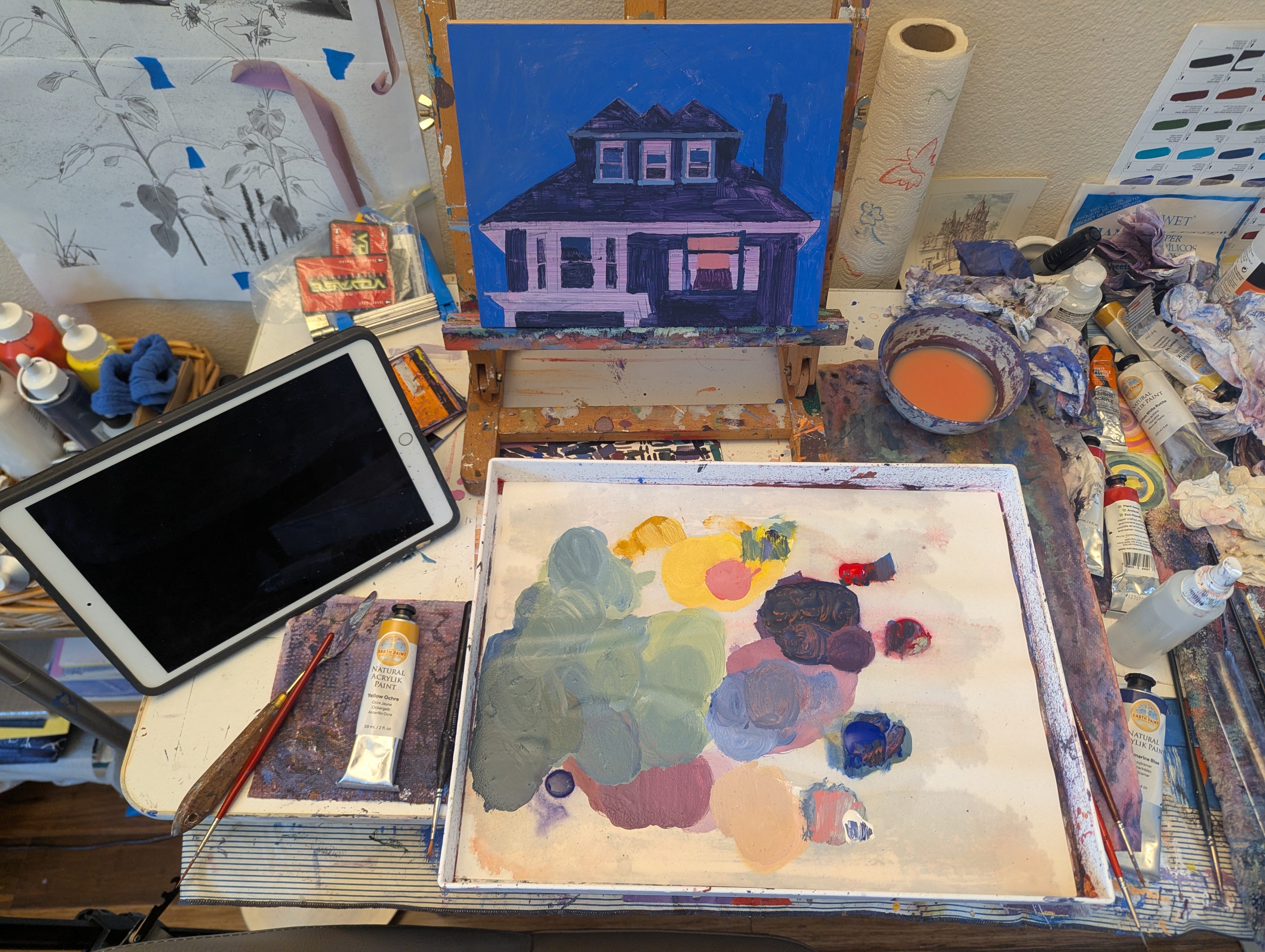
These decisions, and more I haven’t mentioned, don’t really add up to much. Recently I witnessed a company repainting solely the window sills and trim on a house nearby. They wrapped the entire house along with several parked cars on the street with plastic and then started spray painting. This probably used more plastic in a day than I’ve been saving in a year with my little methods. And don’t even think about much carbon is emitted by firing a single missile from a naval vessel that’s already sailed halfway around the world.
But at the same time, the mental anguish I cause myself by purchasing things wrapped in plastic is reduced somewhat by the routine I’ve created.2 There’s a lot happening in this world that we don’t have control over, so even if it’s just to make myself feel good, I do these things, like bringing fabric produce bags to the grocery store. However: all of the effort I’m putting into reducing my plastic waste and carbon footprint could still be reduced dramatically by switching to oil paints, and it would come with the benefit of further reducing my dependence on petroleum-based products. As I’ve mentioned too many times before, I don’t know exactly when this transition to oil painting will occur, but it’s bound to happen eventually if I keep talking about it, right?
Until that time comes, I’ve got the Natural Earth Acryliks that I’m experimenting with. It’s been a process of understanding this new material and figuring out what its advantages and drawbacks are. The colors seem mostly comparable to regular acrylics, which is a strong advantage. However, I’ve found the paint quickly become sticky and dry if I’m not careful, and so this requires constant misting with the spray bottle to keep it workable. I’ve adapted to this by placing less paint onto the palette than I usually do. And when it comes to things of an archival nature like lightfastness and durability, I have to trust the company’s assurances that their Acrylik has been tested and meets the mark for longevity. Yet another problem that could be solved by switching to oils.
I don’t want any artist reading this to feel bad about their decision to work with acrylics. I still believe, and hope for my own sake, that you can create beautiful and important artworks with this occasionally disparaged medium.3 Painting with acrylics every weekend or even multiple times a week isn’t going to cause your death from toxic fumes or microplastic inhalation (still, don’t eat it) and it won’t cause the destruction of the world. But in the meantime (talking about the coming destruction of the world here) I’m going to keep looking for little ways to green my painting practice. At the very least it keeps me occupied.
I also mistakenly used to think that to properly paint with oils, I’d need to mix the paints with toxic petroleum-based solvents. But there have always been a range of options for the oil painter looking to work non-toxic, and the list of options keeps growing.
I started buying my wooden painting panels from local artist and carpenter Thomas Cook, which keeps me from having to create a bunch more garbage by ripping open the plastic wrapped panels that come from the art store.
I’m constantly thinking about the artist I saw at a high-profile gallery in NYC who listed the materials of his paintings as “pigment suspended in polymer emulsion” — anything to avoid calling it acrylic.
What about watercolors? How green are they?
Yessss I loved the article you linked on non toxic solvents! I’ve been a gamsol fan for years and honestly that just sealed the deal for me on it even further.
I paint with oils in the tiniest space (7’x8’) with no specialized ventilation aside from a window and have never had headaches from working after switching from acrylic. I hope the natural acrylics keep working for you, but when you’re ready, happy to help scaffold you into the land of oils. It’s wonderful here.